If you’ve ever set up direct deposit, paid bills online, or transferred money between bank accounts, you’ve probably been asked for a routing number. Learn exactly what it is and where you can find it.
What Is a Routing Number?
A routing number, sometimes called an ABA routing number or routing transit number (RTN), is a unique nine-digit number assigned to a bank or credit union. Think of it like a mailing address for your financial institution. While your account number identifies your specific account, the routing number identifies the bank where the account is held.
Routing numbers are commonly used for:
- Direct deposit
- ACH payments and transfers
- Automatic bill payments
- Tax refunds
- Domestic wire transfers
- Check processing
Every routing number contains nine digits and is designed to help payments move through the banking system accurately and efficiently.
Routing Number vs. Account Number
Routing numbers and account numbers work together, but they serve different purposes.
- Routing number: Identifies the bank or financial institution
- Account number: Identifies your specific account at that bank
When setting up a payment or transfer, both numbers are usually required. The routing number directs the transaction to the correct bank, while the account number ensures the funds are deposited into the correct account.
Where Can You Find Your Routing Number?
There are several easy ways to locate your routing number.
1. On a Check
Your routing number is typically the left number printed along the bottom of a paper check. The account number is usually located directly next to it.
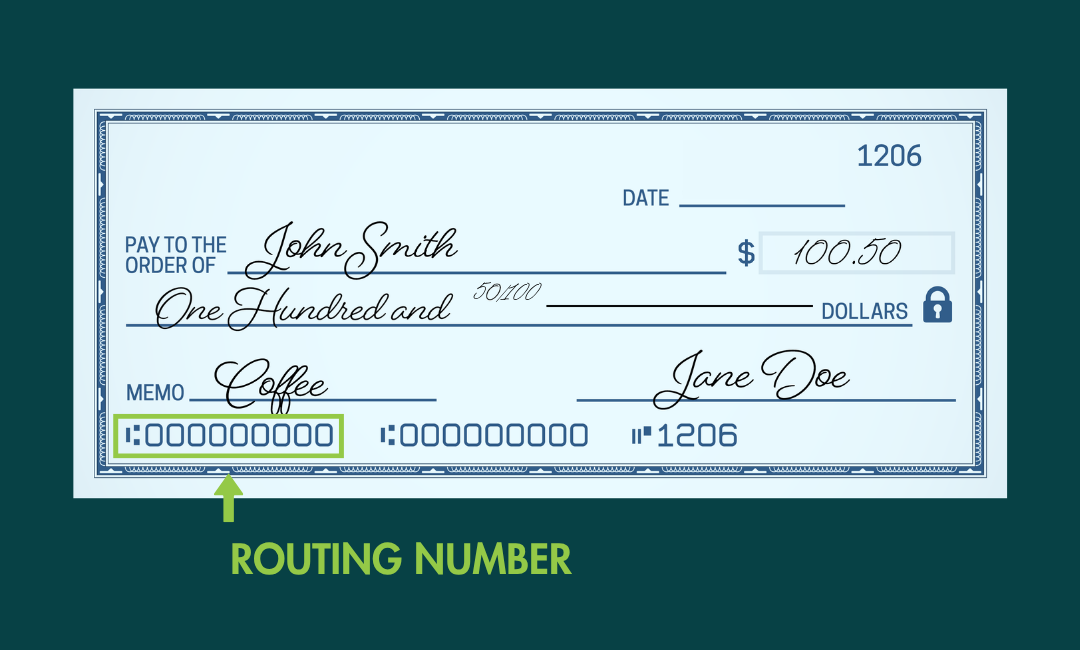
Example of where to find your routing number on a personal check.
2. Through Online Banking or Mobile Banking
Many banks display routing numbers within online banking platforms or mobile banking apps under account details or account information.
3. On Bank Statements
Some banks include routing numbers on printed or electronic statements.
4. By Contacting Your Bank
If you are unsure which routing number to use, contacting your bank directly can help avoid payment delays or processing issues.
Are There Different Types of Routing Numbers?
In some cases, yes. Certain financial institutions use different routing numbers depending on the type of transaction being processed.
Examples may include:
- ACH routing numbers for electronic payments
- Wire transfer routing numbers for domestic wires
- Regional routing numbers tied to different geographic areas
Larger banks may have multiple routing numbers due to mergers, account types, or regional operations.
Frequently Asked Questions
How many digits is a routing number?
Routing numbers are always nine digits long.
Is a routing number the same as an ABA number?
Yes. The terms “routing number,” “ABA routing number,” and “routing transit number” are often used interchangeably.
Is it safe to share a routing number?
Routing numbers are commonly shared when setting up direct deposit or payments. However, it’s still important to protect your banking information and only provide account details through trusted sources.
Can routing numbers change?
Yes. Banks may update routing numbers after mergers, acquisitions, or operational changes.
Routing numbers play an important role in everyday banking transactions. Whether you’re receiving a paycheck through direct deposit, paying bills online, or transferring money between accounts, using the correct routing number helps ensure your payments are processed accurately and securely.